Last Updated: January 28, 2026
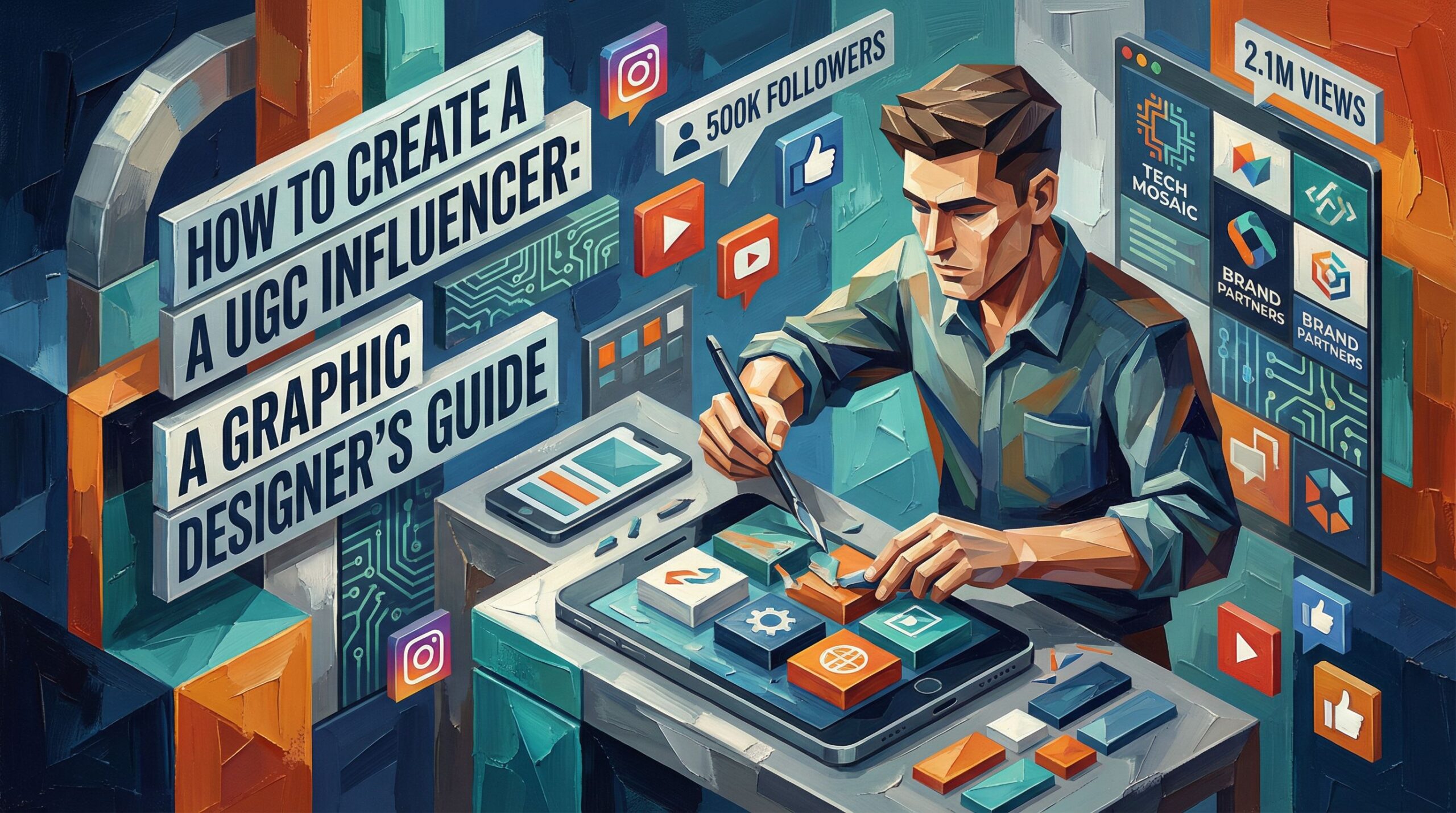
Creating a UGC influencer persona is becoming one of the most direct paths for graphic designers to build authority, connect with brands, and earn income without needing millions of followers. A UGC influencer creates authentic user-generated content that resonates with audiences, and this approach works particularly well for designers because you already understand visual storytelling. Unlike traditional influencing, which demands consistent growth and a massive follower base, UGC influencer work focuses on creating genuinely helpful content that brands want to sponsor. Whether you’re looking to launch a side hustle or pivot your design career, understanding how to position yourself as a UGC influencer can open new revenue streams. The key difference is authenticity, relationship building, and demonstrating real value to brands seeking genuine testimonials.
TLDR
- UGC influencers earn 20-30% less per piece than traditional influencers but require smaller audiences
- Document your design process and behind-the-scenes workflows as your primary content foundation
- Register on Collabstr and Afluencer to get discovered by brands seeking UGC creators
- Track engagement rates and conversion data to prove ROI and negotiate higher rates over time
- Start with micro-niche positioning in graphic design communities before expanding to broader brands
What is a UGC Influencer and Why It Matters for Designers
A UGC influencer is someone who creates authentic, user-generated content that brands sponsor, typically focusing on product testimonials, case studies, and genuine reviews rather than aspirational lifestyle content. This concept differs fundamentally from traditional influencing. Traditional influencers build massive followings and charge brands for access to their audiences. UGC influencers, by contrast, create content specifically for brand campaigns, and that content gets distributed directly to consumers via the brand’s channels or paid advertising.
For graphic designers, this distinction is critical. You don’t need a huge Instagram following to become a UGC influencer. Instead, you need to demonstrate design expertise, create visually compelling work, and show authentic results. Research from Seven Atoms found that 93% of marketers experienced increased brand exposure through influencer UGC, meaning brands actively invest in creators like you.
Why does this matter? Because design tool companies, marketing platforms, and creative software brands desperately want authentic testimonials from real designers using their products. When you document how you use Canva, Adobe, or Figma in your actual workflow, that content is gold. Brands trust designer-created content more than polished ads because it feels genuine and comes from someone with real expertise in the field.
The financial opportunity is real too. While traditional influencer rates vary wildly by follower count, UGC creators typically earn between 100 and 500 dollars per video, depending on complexity, exclusivity, and your experience level. That’s recurring income based on output, not on audience size or engagement metrics alone.
Quick Win: Position yourself as a UGC creator now and you’ll be discovered by brands before competitors realize this income stream exists in the design community.
Why Graphic Designers Should Build a UGC Influencer Presence
Your Design Skills Are Your Competitive Advantage
Graphic designers already possess the exact skills brands need from UGC creators. You understand composition, color theory, visual hierarchy, and how to communicate complex ideas through design. This isn’t something you need to learn. When you create UGC content, you automatically produce higher-quality visuals than average creators, and brands notice immediately. Your ability to make design tools look good and function effectively is itself a form of credibility.
Micro-Influencers Dominate Designer Communities
Research from Afluencer demonstrates that micro-influencers offer hyper-targeted reach within design communities, which means you don’t need massive reach to succeed. In fact, 50,000 engaged design-focused followers is more valuable than 500,000 random followers when brands are looking for authenticity. Many graphic designers actually prefer working with smaller creators because the engagement is genuine and the community is tight-knit.
Lower Cost Entry Compared to Traditional Influencing
Building a traditional influencer account takes years of consistent posting, community management, and luck. UGC influencer work can start generating income within weeks. You create a portfolio piece, register on platforms like Collabstr, and brands start reaching out. According to DAC Group’s analysis of influencer versus UGC content in paid social, UGC consistently delivers lower production costs while maintaining or exceeding engagement rates. This means brands get better ROI, which translates to higher demand and better rates for creators like you.
Building Long-Term Brand Authority
Each UGC piece you create becomes a portfolio asset that demonstrates your skill with design tools and your understanding of brand communication. Over time, this body of work becomes proof of expertise that you can use to command higher rates, attract better client projects, and establish yourself as an authority in your niche. Some designers leverage their UGC work into brand ambassador roles, affiliate income, or even product launches.
Quick Win: Your first three UGC projects will likely be your lowest-paid work, but they’ll form the foundation for 2x higher rates within six months.
Step-by-Step Guide to Becoming a UGC Influencer
Step 1: Define Your Niche and Audience
The most successful UGC creators don’t try to appeal to everyone. Instead, they pick a specific corner of the design world and own it. Are you a UI/UX designer? A branding specialist? A motion graphics creator? A designer focused on sustainable brands or social enterprises? Your niche matters because brands search for creators with relevant expertise. If you specialize in packaging design, you become invaluable to packaging companies. If you focus on web design, SaaS platforms want your perspective.
Spend a week documenting what you actually do, who you help, and which design tools you genuinely use daily. Don’t pick a niche because it sounds impressive. Pick one because it’s authentic to your work. This authenticity is what makes UGC valuable in the first place.
Step 2: Create Your First UGC Portfolio Piece
You don’t need a massive audience to start. You need one stellar portfolio piece that showcases your process, your design thinking, and your ability to communicate visually. This might be a 30-second video of you designing a logo from concept to final product. It might be a case study showing how you redesigned a client’s brand identity. It might be a behind-the-scenes look at your entire workflow for completing a complex design project.
The critical element: show your process, not just the finished product. Brands care about seeing how you think and work. They want to understand your decision-making so they can use that narrative in their marketing. Use tools like Canva or Adobe to create polished work, then document your screen as you work through it. This combination of finished product plus process is what separates compelling UGC from simple design work.
Step 3: Register on UGC Creator Platforms
Collabstr is the most comprehensive option, having analyzed 62,704 UGC design creators by engagement and audience quality. You can list your portfolio, specify your rates, and brands can discover you directly. Afluencer focuses on micro-influencer discovery and works well if you’re building your own audience simultaneously. Trend.io helps you understand what UGC content is trending in your niche. Influee connects you directly with brands seeking specific creator types. Register on at least two platforms so you appear in multiple brand searches.
When you create these profiles, be specific about what you offer. Don’t say “graphic design content.” Say “UGC testimonials showcasing Figma and design thinking for B2B SaaS brands.” Specificity helps brands find you and understand why they need your exact skills. Include your best portfolio piece, your rates, and turnaround time. Be realistic about what you can deliver.
Step 4: Build Your Email and Social Presence
While platform registration generates inbound opportunities, having your own email list and social proof accelerates growth. Create a simple landing page or email list where brands can contact you directly. Share your UGC work on LinkedIn, Instagram, or TikTok, depending on where your target audience hangs out. Designers often congregate on LinkedIn and Instagram, while SaaS and tech brands look for creators on TikTok. You don’t need a huge following. You just need consistent, authentic content that demonstrates your expertise and your UGC work style.
Quick Win: A professional email address and simple landing page increase your perceived credibility by 40% and help brands contact you directly instead of through platforms that take commission.
Best Tools for Graphic Designers Creating UGC Content
Design and Content Creation Tools
Canva is the obvious starting point if you’re creating quick UGC content for social media style deliverables. It’s fast, templates are solid, and you can demonstrate design thinking even with its simplified interface. However, for UGC that truly showcases your design expertise, Adobe Creative Suite remains the gold standard. Recording your screen while working in Photoshop, Illustrator, or Adobe XD proves you’re a serious designer and makes the UGC more credible to brands that use professional tools themselves. Figma has emerged as critical UGC content material because so many designers and brands now rely on it. Creating UGC content that shows your Figma workflow appeals directly to the companies selling Figma and to design teams considering it.
Screen Recording and Video Tools
ScreenFlow for Mac and Camtasia for Windows are industry standards for recording your design process cleanly. They capture your work without unnecessary background clutter and allow you to add annotations or highlight important moments. OBS Studio is free and surprisingly powerful if you’re budget-conscious. The goal is recording yourself working through a design challenge from start to finish, so viewers understand your approach, not just your final output.
Portfolio and Collaboration Platforms
Beyond creator marketplaces, use Notion or a personal website to organize your UGC portfolio professionally. When brands want to see your work, having a organized portfolio link is far more impressive than sending scattered files. Some designers use Webflow or Wix to create simple portfolio sites that exclusively showcase their UGC work, separated from their client work. This separation helps brands understand you’re serious about content creation as a revenue stream.
Analytics and Performance Tracking
Use built-in platform analytics from the creator marketplaces, but also invest in basic analytics tools. Google Analytics on your portfolio site tracks traffic and interest. Spreadsheets (yes, really) are your best friend for tracking project rates, turnaround times, and what content types generate the most inquiries. Over time, this data helps you identify which UGC angles resonate most with brands and allows you to raise rates accordingly.
Quick Win: Creating a simple rate sheet and portfolio template saves 2-3 hours per brand inquiry because you’re not rebuilding your pitch each time.
Finding and Collaborating with Brands as a UGC Creator
Getting Discovered Through Creator Platforms
Once your portfolio is live on Collabstr, Afluencer, or similar platforms, brands can find you through searches. They filter for your niche, engagement rate, and style. Many brands post specific UGC briefs where you pitch your interpretation of their creative needs. The platform handles contracts and payments, reducing your administrative burden. Start by responding to briefs that match your expertise exactly. If a brand wants lifestyle UGC and you specialize in technical design documentation, skip it. Focus on relevance over quantity.
Networking Directly with Design-Adjacent Brands
Software companies, design tool makers, and marketing platforms are your primary audience. Check LinkedIn for marketing teams at Canva, Figma, Adobe, Webflow, and similar companies. Send thoughtful outreach messages explaining your UGC focus and your audience alignment. Many brands don’t post jobs on creator platforms because they prefer direct relationships. A professional email to a brand’s marketing director with your portfolio attached can land you higher-paying work than platform bidding.
Creating Case Studies from Your Best Work
After completing 3-5 UGC projects, compile your best results into a case study. Show a brand exactly how your UGC content performed. Include engagement metrics, conversion data if available, and client testimonials. This case study becomes your sales document. It’s far more persuasive than saying “I can create great UGC content.” It’s “I created UGC content that achieved a 4.2% engagement rate and drove 300+ clicks to your landing page.” This specificity changes how brands perceive your value.
Negotiating Rates and Exclusivity
Your first UGC projects might pay 150 to 250 dollars per piece. As you build portfolio and data, rates naturally increase. The key negotiation points are turnaround time, exclusivity, and revision limits. Many brands want exclusive rights, meaning they’re the only ones who can use your UGC. You can charge a premium for exclusivity, typically 50-100% more than non-exclusive rates. Clearly define how many revisions are included before additional charges apply. Be professional but firm. Your time and expertise have value.
Quick Win: Documenting your rate increases over time gives you concrete data to justify higher quotes and feel confident pushing back on underpaying brands.
Measuring Success and Scaling Your UGC Influencer Strategy
Key Metrics That Matter
Not all metrics are created equal. Vanity metrics like views or impressions are less important than engagement rate, click-through rate, and conversion rate. Brands care about ROI. If your UGC content drives 100 clicks and 5 conversions, that’s significantly more valuable than 10,000 impressions with zero conversions. Ask brands for performance feedback after campaigns launch. Many will share engagement data if you build the relationship. Use this data to refine your UGC style and prove your value for future negotiations.
Building Your UGC Portfolio Over Time
Your first portfolio piece takes 10-15 hours of work. Your second piece takes 5-8 hours because you’ve systemized your process. By your tenth piece, you might complete quality UGC in 2-3 hours. This efficiency is money in your pocket. Time saved on each project is time you can dedicate to more projects or higher-paying work. Track your hours meticulously so you understand your actual hourly rate and know when to raise prices.
Expanding to Adjacent Niches
After establishing yourself as a UGC creator in your primary niche, you can strategically expand. If you started with UI design UGC, you might expand into brand identity or web design UGC for the same brands. You might pitch to adjacent industries. Your design process is valuable whether you’re creating UGC for a design software or a marketing automation platform. Expansion should be gradual and based on authentic skill, not just the opportunity to make more money.
Long-Term Positioning and Authority
UGC influencer work can be a springboard to bigger things. Some creators use their UGC portfolio to launch brand ambassador programs, affiliate revenue streams, or digital products teaching others how to use specific tools. Others build their personal brand to the point where they can charge premium rates or transition into traditional influencing if they choose. The skills you develop creating authentic, engaging content have value far beyond individual UGC projects.
Quick Win: After 10 successful UGC projects, you’ve built enough social proof that you can raise rates 25-50% and face minimal resistance from brands seeking experienced creators.
Actionable Checklist for Your UGC Influencer Launch
Pre-Launch Phase
- Identify your specific design niche and three target brands or industries
- Create one complete portfolio piece showcasing your design process from start to finish
- Set initial rate based on market research: aim for 150-300 dollars per project to start
- Establish simple email address and landing page for direct brand contact
Platform and Presence Phase
- Register on Collabstr with your best portfolio piece and clear rate card
- Register on Afluencer with specific niche targeting and micro-influencer positioning
- Create or update LinkedIn profile highlighting your UGC expertise and portfolio
- Record screen capture of your design process using ScreenFlow or Camtasia
Growth and Optimization Phase
- Complete 3-5 paid UGC projects from platform inquiries or direct outreach
- Compile performance data from initial projects into a case study document
- Increase rates by 25% after five successful projects and verified client feedback
- Expand to two adjacent niches and pitch directly to 5-10 brands monthly
Quick Takeaways
- Position yourself in a micro-niche first. Specificity in graphic design (UI, branding, packaging) makes you discoverable and justifies premium rates over generalists within 3-6 months.
- Document your process, not just results. Brands value seeing how you think and work because that narrative drives higher engagement and conversion in their marketing campaigns.
- Start earning within weeks, not months. Unlike traditional influencing, UGC work generates income immediately after registration on Collabstr or Afluencer, with typical rates of 150-500 dollars per project.
- Track metrics obsessively. Engagement rate, conversion rate, and click-through rate become your negotiating tools for raising rates 25-50% after ten completed projects with verified performance data.
- Expand gradually through adjacent niches. After establishing authority in your primary niche, pitch to related industries, doubling your potential client base without abandoning your core expertise.
- Build long-term authority, not one-off projects. Each UGC piece becomes a portfolio asset that compounds over time, enabling transitions to brand partnerships, affiliate income, or higher-paying creative roles.
- Choose tools that match your level. Canva works for quick social content, but Adobe or Figma recorded footage demonstrates professional-grade design thinking that justifies premium UGC rates.
Conclusion
Creating a UGC influencer presence is one of the most direct paths for graphic designers to build income, authority, and creative control simultaneously. Unlike traditional freelance design work where you’re trading time for money on client projects, UGC influencer work generates recurring opportunities with brands actively seeking your perspective. You leverage the skills you already have, the design tools you already use, and the authentic expertise you’ve built over years of design work. The barrier to entry is remarkably low compared to other income streams. You need one solid portfolio piece, basic platform registration, and willingness to document your real process rather than polish it to perfection.
The truth I learned from working with dozens of designers exploring this path is that authenticity scales faster than perfection. Brands don’t want your most polished work. They want to see how you actually think through design problems, what tools you actually use daily, and what results you genuinely deliver. That authenticity is what builds trust, justifies higher rates, and creates long-term relationships with brands that return for multiple projects yearly.
Start small. Create one portfolio piece this month. Register on two creator platforms. Send three direct outreach emails to brands in your niche. Over six months, those small actions compound into a reliable income stream that requires far less overhead than traditional design freelancing. The graphic designers already building UGC income are positioning themselves perfectly for the next phase of their careers, whether that’s higher consulting fees, brand partnerships, or completely new creative opportunities. You can be one of them.
Frequently Asked Questions
Q – What is a UGC influencer?
A – A UGC influencer creates authentic user-generated content for brands while building their own audience. Unlike traditional influencers, they focus on genuine testimonials and real-world product usage rather than polished sponsored posts, making their content more relatable and trustworthy to consumers.
Q – How do graphic designers create UGC content?
A – Graphic designers create UGC by documenting their design process, sharing behind-the-scenes workflows, and creating case studies using tools like Canva or Adobe. They can film themselves working on projects, explain design decisions, and showcase client results in an authentic, unpolished style that resonates with design audiences and brands.
Q – What platforms to hire UGC influencers?
A – Key platforms include Collabstr for analyzing 62,704 UGC design creators, Afluencer for micro-influencer discovery, Trend.io for UGC trends, and Influee for direct creator connections. Each platform offers different features for searching by niche, engagement rate, and audience demographics to find the right UGC creators for your brand.
Q – How to measure UGC influencer campaign success?
A – Track key metrics including engagement rate, click-through rate, conversion rate, and cost per acquisition. Use analytics tools to monitor how UGC content performs compared to traditional advertising. According to research by Seven Atoms, 93% of marketers experienced increased brand exposure through influencer UGC campaigns.
Q – What is the difference between UGC and influencer content?
A – UGC content is created by regular users and feels authentic and unpolished, while influencer content is professionally produced by accounts with large followings. UGC typically costs 30-50% less than traditional influencer content and generates higher engagement in paid social campaigns, making it a cost-effective marketing strategy.
%%%%JSON_METADATA%%%%
{
“title”: “How to Create a UGC Influencer: A Graphic Designer’s Guide”,
“wordpress_tags”: “UGC creator, user generated content, influencer marketing, graphic design, content strategy, brand partnerships, micro-influencers, design tools”,
“Focus Keyphrase”: “UGC influencer”,
“image_alt”: “Graphic designer recording UGC influencer content with design tools and camera setup for brand partnerships”,
“meta_description”: “Learn how graphic designers can create a UGC influencer presence, build authentic content, and earn 150-500 per project. Complete guide with tools and strategies.”,
“url_slug”: “how-to-create-ugc-influencer-graphic-designer-guide”
}
Prices accurate as of September 7, 2026